
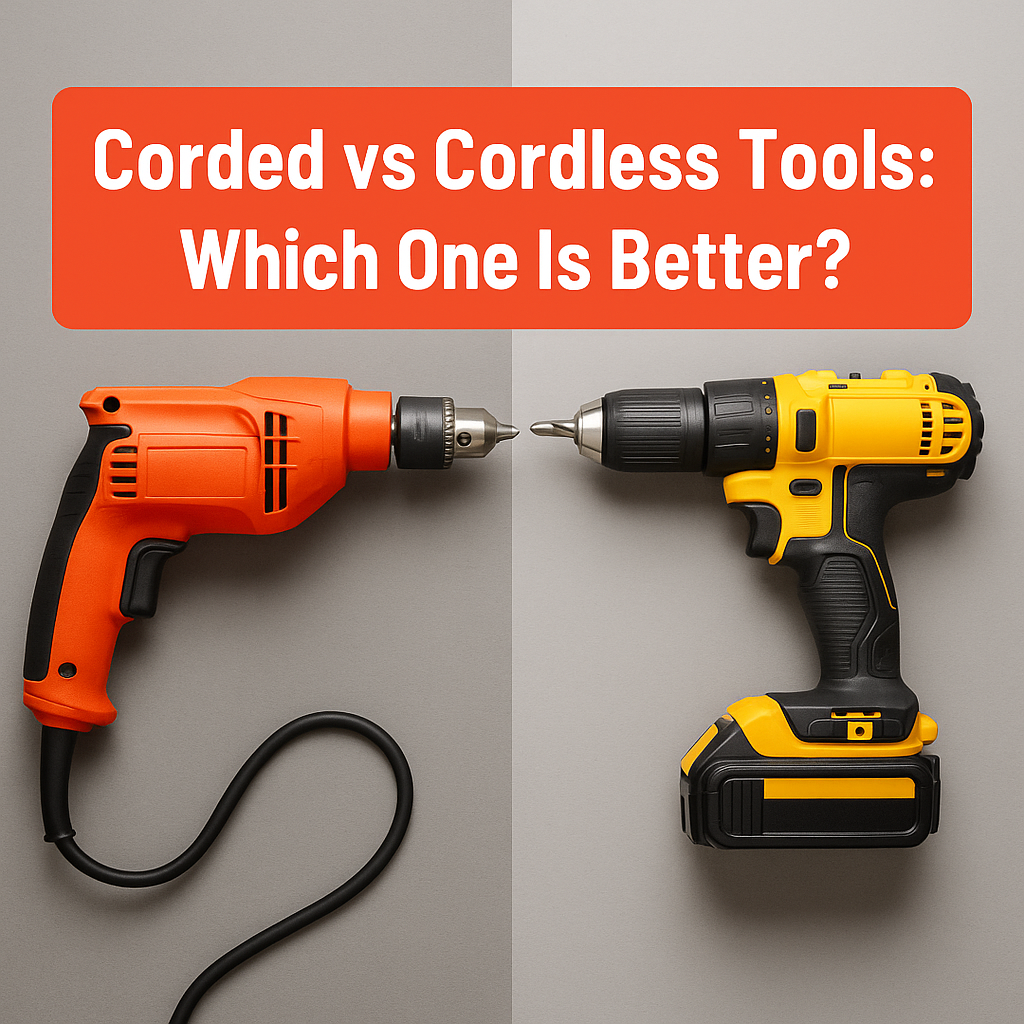
Corded vs Cordless Tools: Which One Is Better?
Corded and cordless tools serve different styles of work, and the better choice depends on how much power you need and how freely you want to move. Both types can handle tough tasks, but they behave differently in real situations.
This guide explains these differences in a clear and practical way so that you can pick the right tools based on your routine, not assumptions.
What Makes Cordless Tools Popular Today?
Cordless tools are preferred because they make work easier in places where wires get in the way.
Cordless drills, impact drivers, and grinders run on lithium-ion batteries that deliver steady performance until the battery is almost empty. This steady output helps during long drilling sessions or continuous screwing work.
Many workers also like that modern batteries charge quickly. A half-hour charge often gives enough power for light and medium tasks. Brushless motors add to this by keeping the tool cooler and using battery power more efficiently.
Battery-sharing platforms are another reason cordless tools feel practical. One battery can run multiple tools within the same brand, which saves money and reduces clutter in the toolbox.
Cordless tools work well for roof repairs, cabinet installations, car work, general home fixing, and outdoor tasks where a socket is not nearby.
Why Do Some People Still Prefer Corded Tools?
Corded tools provide steady and uninterrupted power, which suits long and demanding jobs.
Since corded tools draw electricity directly from the outlet, their motor strength stays consistent throughout the task. This helps during continuous cutting, grinding, or drilling in tough materials.
Corded tools also tend to be lighter because they do not carry a battery. This makes them comfortable for jobs that require precision or long working hours, such as sanding, shaping wood, or cutting tiles.
Workshops that run tools through the day rely on corded machines because they do not slow down and do not need battery rotation.
How Does Power Output Differ?
Corded tools deliver stable torque and speed because they receive constant electricity.
Cordless tools give strong output, but the strength depends on battery age and charge level. A new or fully charged battery feels sharp. As the battery ages after many cycles, heavy tasks may not feel as strong.
Jobs that involve thick metal, solid hardwood, or concrete usually need stable torque for long durations. Cordless tools can handle these tasks but may drain the battery quicker.
How Does Movement Affect Your Work?
Movement becomes important when you work in small spaces or when you need to shift positions often.
Cordless tools allow free movement since there is no wire pulling from behind. This is useful inside cars, cupboards, attics, and areas with tight angles. Workers do not have to stop and adjust cables every few minutes.
Corded tools limit movement because the cable can get stuck around corners or objects. Even with a long extension, you must keep checking where the wire is placed.
Trades like electrical repair, automotive work, HVAC servicing, and plumbing often prefer cordless tools for this reason.
Why Does Weight and Balance Matter?
Cordless tools carry a battery, which adds weight to the base. Newer models are designed with better balance, so the weight feels comfortable even during overhead work.
Corded tools feel lighter because there is no battery attached. This can reduce wrist strain when sanding, cutting, or shaping for long hours.
For people who complete repetitive tasks or work above shoulder height, these weight differences can affect speed and comfort.
How Do Batteries Affect Long-Term Use?
Battery behaviour influences cordless performance, so understanding it helps avoid unexpected slowdowns.
Lithium-ion batteries last longer when they are charged before reaching zero. Storing them at half charge during long breaks helps keep their capacity stable. Keeping batteries away from heat also protects their lifespan.
A few simple habits make cordless tools feel strong for years:
- Rotate between two batteries instead of draining one fully
- Charge batteries before they drop too low
- Avoid leaving batteries in cars or hot locations
- Use fast chargers when needed but not for every cycle
- Keep battery contacts clean to maintain efficient power flow
These small steps help maintain run time and motor strength.
How Do Safety Conditions Differ Between Both Types?
Cordless tools reduce cable-related hazards. There is no wire on the floor, so there is less chance of tripping or cutting through a cable accidentally.
Corded tools require more cable awareness. Workers need to check the wire position often and keep it away from sharp or hot surfaces. In wet or dusty areas, cable insulation must stay intact to avoid risks.
Both types need proper ratings for dusty, wet, or outdoor environments, but corded tools need extra attention because of their exposed cable.
When Do Costs Change Between Corded and Cordless Tools?
Corded tools usually cost less upfront.
Cordless tools cost more because of the battery and charger, but they save time during setup. You pick up the tool and start working without searching for sockets or adjusting wires.
Over the years, the cost difference depends on how you work.
Corded tools:
- No battery replacements
- Lower initial price
- No waiting time for charging
Cordless tools:
- Higher initial investment
- Battery replacements after a few years
- Faster workflow and fewer interruptions
Many workshops keep both types because it creates balance between convenience and power.
How Should You Pick the Right One?
The easiest way to choose is to think about your daily tasks.
Cordless tools are a good fit for mobile workers who move across rooms, climb ladders, or work in vehicles.
Corded tools suit long, repetitive work that runs for hours without breaks.
Most professionals keep a mix so they can handle every type of project with ease.
Conclusion
The right choice between corded and cordless tools depends on how you work, how long your tasks run, and how much freedom you need at the job site. Cordless tools offer simple movement and quick setup, while corded tools deliver consistent power for long sessions. Many users rely on both because it gives a complete setup for every type of project.
If you want tools that support smooth, reliable, and comfortable work, explore the full range at IMSONS. You will find corded and cordless options that fit your routine, match your workload, and help you work with confidence from start to finish.
FAQs
1. Are corded tools stronger than cordless tools in real usage?
Corded tools usually feel stronger during long, demanding tasks because their power does not drop.
They pull electricity directly from the outlet, so torque stays consistent even during heavy cutting, grinding, or drilling. Cordless tools deliver strong bursts too, but their power depends on battery age, temperature, and charge level.
2. How long do cordless tool batteries last on a single charge?
Most cordless tools run anywhere from 20 minutes to 2 hours, depending on the task.
Light drilling uses far less energy than continuous grinding or cutting. Higher-Ah batteries increase run time, and brushless motors help the battery discharge slowly.
3. Do corded tools overheat less than cordless tools?
Corded tools typically stay cooler during continuous work.
They do not rely on batteries, so there is no heat buildup from charging and discharging cycles. Cordless tools with brushless motors also stay cool, but heavy load + old batteries can increase heat.
4. Can cordless tools replace corded tools for professional work?
Yes, for most tasks, cordless tools are strong enough for professional use.
Modern batteries and brushless motors give reliable torque for drilling, driving, cutting, and grinding. Only tasks that run non-stop for hours (tile cutting, sanding, grinding) still favour corded tools.
5. What battery Ah rating should I choose for cordless tools?
Choose 4Ah or 5Ah for regular work and 8Ah+ for long or heavy-duty tasks.
Higher Ah gives longer run time and sharper performance. Lower Ah (2Ah or 1.5Ah) feels lighter but drains faster during tough jobs.
