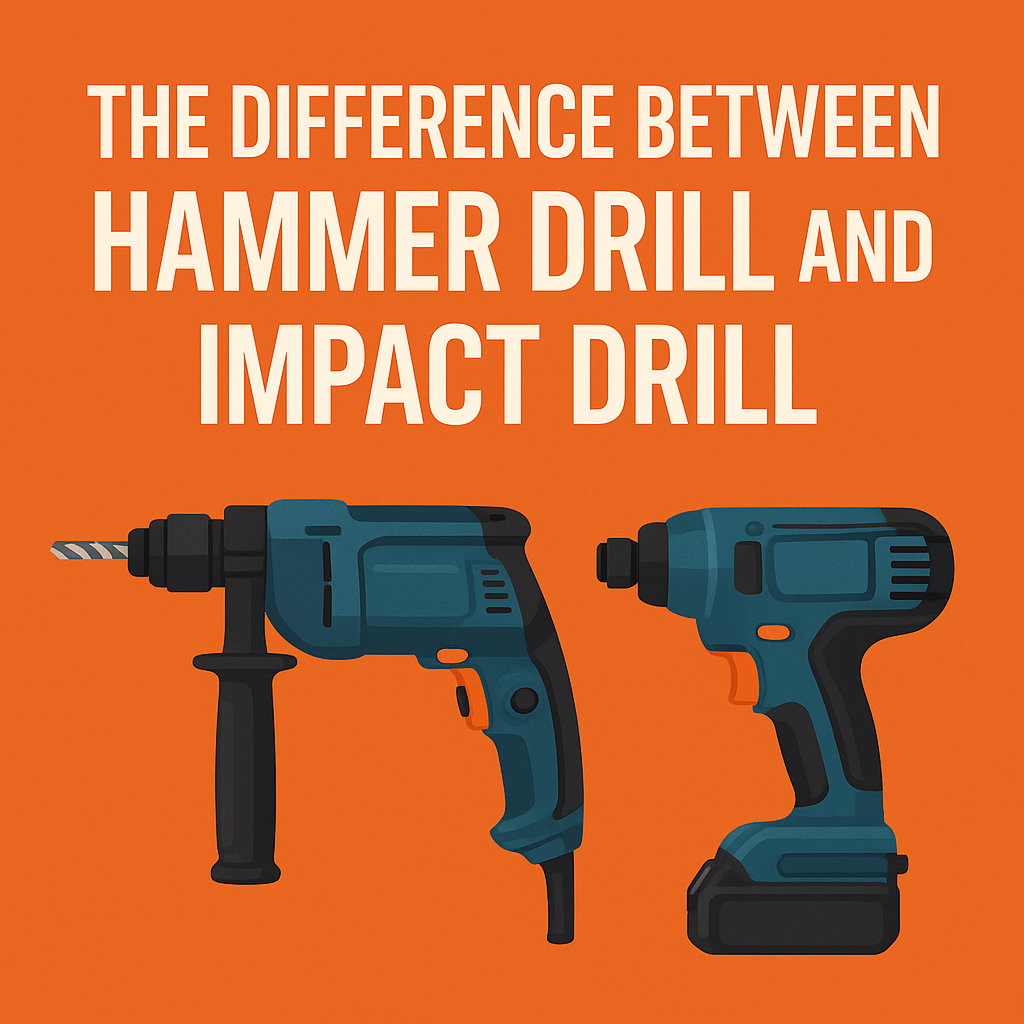
The Difference Between Hammer Drill and Impact Drill
If you’ve ever tried drilling into concrete or struggled to drive a screw into hardwood, you’ve probably wondered: what’s the real difference between a hammer drill and an impact drill? Both look similar and sound powerful, but inside, they work in completely different ways. Once you understand how each works, you’ll never pick the wrong one again.
What is a Hammer Drill
A hammer drill looks like a normal drill, but inside, it has two metal discs with ridges that push against each other as the drill spins. This creates a fast back-and-forth tapping motion (thousands of tiny strikes per minute) while the bit is rotating. That’s how it breaks through concrete, brick, or stone.
When you drill into concrete without a hammer function, you’ll notice it feels like pushing against solid glass. The bit spins but hardly moves. The hammer motion solves that by chipping the material slightly on each hit while rotating to clear it out. That’s why holes in masonry are cleaner and faster when using a hammer drill.
Things most people don’t know about hammer drills
- The hammer motion doesn’t actually move the bit by centimeters, it’s only a few millimeters. But at 20,000+ strikes per minute, it feels like a jackhammer in your hand.
- Turning off the hammer mode turns it into a regular drill. So if you’re drilling into wood or metal, you can just use the rotary setting.
- Using carbide-tipped masonry bits makes a big difference. The hammering action alone isn’t enough without those bits, they’re designed to survive the constant impact.
- To avoid overheating, pull the bit out every few seconds to clear concrete dust. Many people skip this, but it helps the hammer motion work properly and prevents jamming.
What Makes an Impact Drill (or Impact Driver) Different
Impact drills (often called impact drivers) are built for something completely different. Instead of hammering forward, they hammer sideways, in a twisting motion. When the screw meets resistance, the internal hammer hits the anvil inside, creating bursts of torque. That’s what drives screws, bolts, and fasteners deep without stripping their heads.
If you’ve ever tried driving long screws into wood with a normal drill, you’ve seen how the bit starts to slip or the screw head gets damaged. An impact driver solves that by applying controlled impacts in rotation. The sound you hear (those clicking noises) is actually the hammer striking inside.
Lesser-known things about impact drivers
- The impacts happen only when needed. When resistance increases, it automatically engages the impact mechanism, saving battery and reducing wrist strain.
- Impact drivers can produce up to three times more torque than a normal drill. That’s why pros use them to install decking, furniture, and heavy hardware.
- Because of the rotational blows, you rarely feel kickback. The tool absorbs the reaction, so your wrist stays stable.
- Always use impact-rated bits. Regular bits can shatter or wear fast due to the rotational impacts.
How Hammer Drills and Impact Drills Differ in Real Use
Even though both tools look similar, their purpose and feel are worlds apart.
A hammer drill combines spinning and forward impact to crush tough surfaces. It’s ideal for concrete, brick, or stone. An impact drill adds rotational bursts to tighten screws or bolts more efficiently, making it perfect for wood, metal, or assembly work.
If you try to use an impact drill on concrete, it’ll spin endlessly and overheat. Use a hammer drill to drive screws and you’ll risk snapping the head off. They’re built for different kinds of force: forward vs. rotational.
How to Know Which One You Need
Think about what you’re drilling into and how often you’ll use it.
If you mostly hang shelves, drill small holes in walls, or drive screws, get an impact drill. It’s compact, light, and handles daily tasks better.
If you work with masonry, stone, or tiles, or plan to drill anchor holes, the hammer drill will do the job faster and cleaner.
Unknown but Useful Tips
Here’s where most people miss out:
- Let the tool do the work. Don’t press down too hard with a hammer drill. Too much pressure kills the hammering action. Light, steady pressure is more effective.
- Use a pilot hole before driving long screws with an impact driver. It reduces stress on both the bit and the material.
- Check your clutch setting. Many people forget this. The clutch prevents over-driving screws or snapping them off, especially with high-torque impact drills.
- Clean and lubricate bits. Masonry dust or metal shavings build up heat. A quick wipe with WD-40 after use extends tool life drastically.
- Battery quality matters. Impact drills rely on bursts of energy, so using a high-output battery gives smoother and stronger impacts.
When to Use Both Together
In professional setups, both tools are used side by side. You use the hammer drill to create pilot holes in concrete or metal, then switch to the impact drill to drive bolts or anchors.
This combo saves time and reduces fatigue since each tool does what it’s best at. If you run a workshop, construction site, or handle frequent repairs, owning both is the most practical approach.
Common Mistakes People Make
- Using the wrong bits: Masonry bits for hammer drills only. Impact bits for impact drivers only. Mixing them breaks bits fast.
- Ignoring vibration: Hammer drills can cause fatigue. Use gloves or take short breaks to prevent hand strain.
- Forgetting speed control: High speed isn’t always better. In fact, lower speed gives better precision and less wear.
- Skipping depth markers: When drilling into walls, mark the bit to avoid going too deep and hitting wiring or plumbing.
- Not cooling bits: If you’re drilling multiple holes, dip the bit in water for a few seconds between holes to keep it cool.
Choosing the Right Tool for Long-Term Use
Before buying, check a few details:
- RPM and BPM: More blows per minute (BPM) means faster drilling in masonry. Higher RPM helps for wood or metal drilling.
- Chuck type: Hammer drills have standard chucks; impact drivers use ¼-inch hex collets.
- Variable speed: Gives better control for precision jobs.
- Corded vs cordless: Corded hammer drills offer consistent power for long drilling jobs, while cordless impact drivers give more flexibility on site.
Final Thoughts
Knowing the difference between hammer drill and impact drill is more than just understanding tools, it’s about working smarter. Both are powerful in their own ways. The hammer drill crushes through concrete like butter when used right, while the impact drill gives unmatched control and torque for fastening tasks.
If you’re setting up your toolkit or upgrading old equipment, visit IMSONS. We offer top-rated hammer drills, impact drivers, and accessories from trusted global brands, backed by expert guidance. Whether you’re a builder, technician, or DIY user, our team helps you pick the right tool for every job.
Explore IMSONS today and get the right power tool that makes every project easier, cleaner, and faster.
