
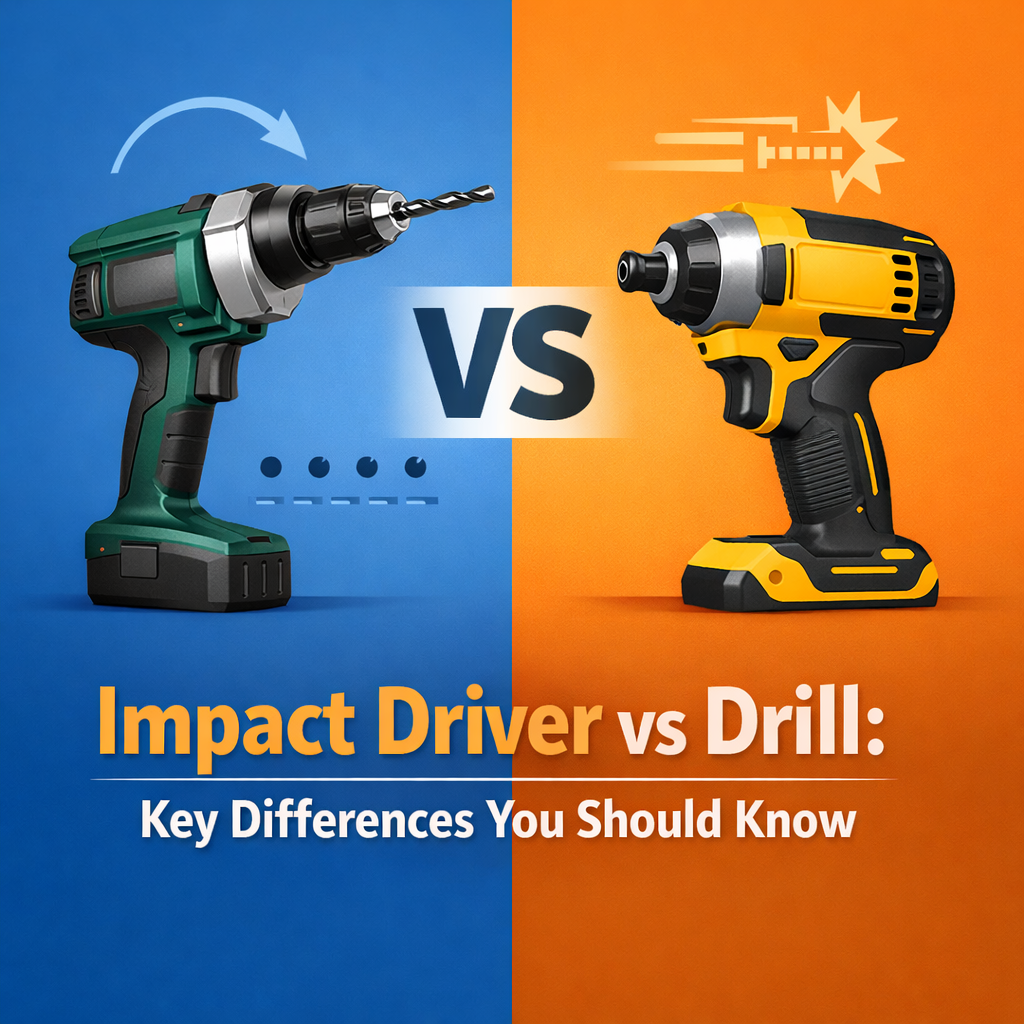
Impact Driver vs Drill: Key Differences You Should Know
The main difference between an impact driver and a drill is the way they deliver power. A drill gives steady, smooth rotation for clean holes and accurate screw placement. An impact driver produces fast bursts of torque that push long screws through tough material with less strain on your hands. Once you understand how each tool behaves, the choice becomes clear for any woodworking, construction or home improvement task.
What a Drill Is Designed to Do
A drill rotates the bit in a continuous motion. This steady rotation helps the bit stay centered and prevents slipping at the start of a hole. It is useful for wood, drywall, plastic and metal, especially when you want clean edges or a straight hole.
The clutch helps stop the screw at the right depth. This prevents stripped screw heads and protects softer material. Drills support many types of bits such as hole saws, spade bits, step bits and countersink bits. This makes a drill a flexible tool for beginners and professionals working on home repairs, carpentry projects, shelf mounting and hardware installation.
Drills are also better for tasks that require careful speed control. Starting slow keeps the bit from wandering. Increasing speed gradually improves accuracy and reduces damage to the material.
How an Impact Driver Creates Strong Torque
An impact driver moves differently. Inside the tool, the mechanism creates quick bursts of force. These bursts help the screw continue forward even when the material becomes dense. This makes impact drivers reliable for long screws, lag bolts and heavy fastening tasks.
The bursts of torque stay inside the tool, so your wrist does not absorb the twisting. This makes the impact driver comfortable to use during long sessions. The louder sound comes from the internal mechanism creating the bursts. It is part of how the tool produces high torque with a compact size.
Impact drivers use hex shank bits because they stay locked in place during sudden torque. This reduces slipping and helps the bit stay inside the screw head.
Why Drills Slip Out of Screws and Impact Drivers Do Not
A drill can slip out of a screw head when friction increases. Since the rotation stays smooth, the bit loses grip once the screw reaches a tight point. This leads to stripped screws or damaged surfaces.
An impact driver pushes the bit deeper into the screw head during each burst. This keeps the bit engaged and reduces cam out. This advantage is useful in framing, decking, fencing and outdoor structures where long screws are common.
When a Drill Works Better Than an Impact Driver
A drill is the better choice when the project needs careful control or clean holes. Use a drill for:
• mounting cabinets
• drilling pilot holes
• installing light fixtures
• working with plastic or thin metal
• drilling for wall anchors
• woodworking that needs precision
A drill is also helpful for creating stepped holes, which are needed for bolts and heavy duty anchors.
When an Impact Driver Saves More Time
An impact driver becomes the preferred tool when the job involves strength and repeated fastening. Use an impact driver for:
• driving long screws into hardwood
• assembling frames
• deck building
• removing stuck screws
• working with construction grade fasteners
• tight corners and overhead work
The shorter body helps you reach tight areas without losing balance. Since the tool handles torque internally, your wrist stays comfortable even when working with many screws.
How Torque and Speed Shape the Impact Driver vs Drill Performance
Torque is the twisting force that moves a screw. A drill spreads torque evenly. This is ideal for light to medium screws. An impact driver delivers torque in quick bursts. This helps the screw move through knots, dense grain and thicker sections of wood.
Speed is also different. Drills allow slow starts for accuracy. Impact drivers offer speed through the trigger but are built to rely on force instead of steady rotation.
Understanding torque and speed helps you match the right power tool to the material and screw type. This leads to cleaner results, fewer stripped screws and better overall control.
Factors That Affect How Both Tools Perform
Bit Type
Impact rated bits are stronger and resist sudden torque better. Standard bits wear out quickly inside an impact driver.
Battery Capacity
High torque uses more power. Bigger batteries give longer runtime and stable performance.
Pilot Holes in Hardwood
A small pilot hole reduces resistance and keeps long screws straight. It also lowers strain on the impact driver.
Heat Management
Drill bits heat up during long drilling. Pausing for a moment helps keep the bit sharp.
Material Density
Softwood works well with both tools. Hardwood slows drills faster and requires stronger torque, which is why impact drivers perform better on dense material.
Which Tool Should You Buy
If you want one tool for general home use, start with a drill. It handles basic repairs, holes, small screws and everyday tasks. When your work shifts toward long screws, outdoor structures or repeated fastening, add an impact driver.
Many workers use both together for the best workflow. The drill creates a pilot hole. The impact driver drives the screw without slipping. This method is common in carpentry, furniture work, electrical installation and construction because it saves time and gives stronger results.
FAQs
What is the main purpose of an impact driver compared to a drill?
An impact driver is built for fastening, not hole making. It is designed to drive screws and bolts into tough materials using short bursts of torque. A drill focuses on steady rotation, which makes it better for drilling clean holes and handling tasks that need precision and speed control.
Can an impact driver replace a drill for home use?
An impact driver cannot fully replace a drill. While it handles screws extremely well, it lacks the control and versatility needed for drilling accurate holes. Most home users get the best results by using a drill for holes and an impact driver for fastening.
Why does an impact driver feel easier on the wrist?
An impact driver absorbs torque internally through its hammering mechanism. This means the twisting force does not transfer directly to your wrist. A drill applies torque continuously, which can strain the wrist when driving long or tight screws.
Do impact drivers damage screws or materials?
Impact drivers do not damage screws when the correct bit and speed are used. In fact, they often reduce stripped screw heads because the bit stays engaged. Damage usually happens when too much force is applied or when non impact rated bits are used.
Is a drill better for beginners than an impact driver?
A drill is usually easier for beginners because it offers better speed control and a clutch that prevents overdriving screws. This helps protect soft materials and allows more precise work, especially for learning basic DIY and household repairs.
Why are impact drivers louder than drills?
Impact drivers are louder because of the internal hammering action that creates bursts of torque. This sound is normal and indicates the tool is working as intended. Drills operate more quietly because they rely on smooth, continuous rotation.
