
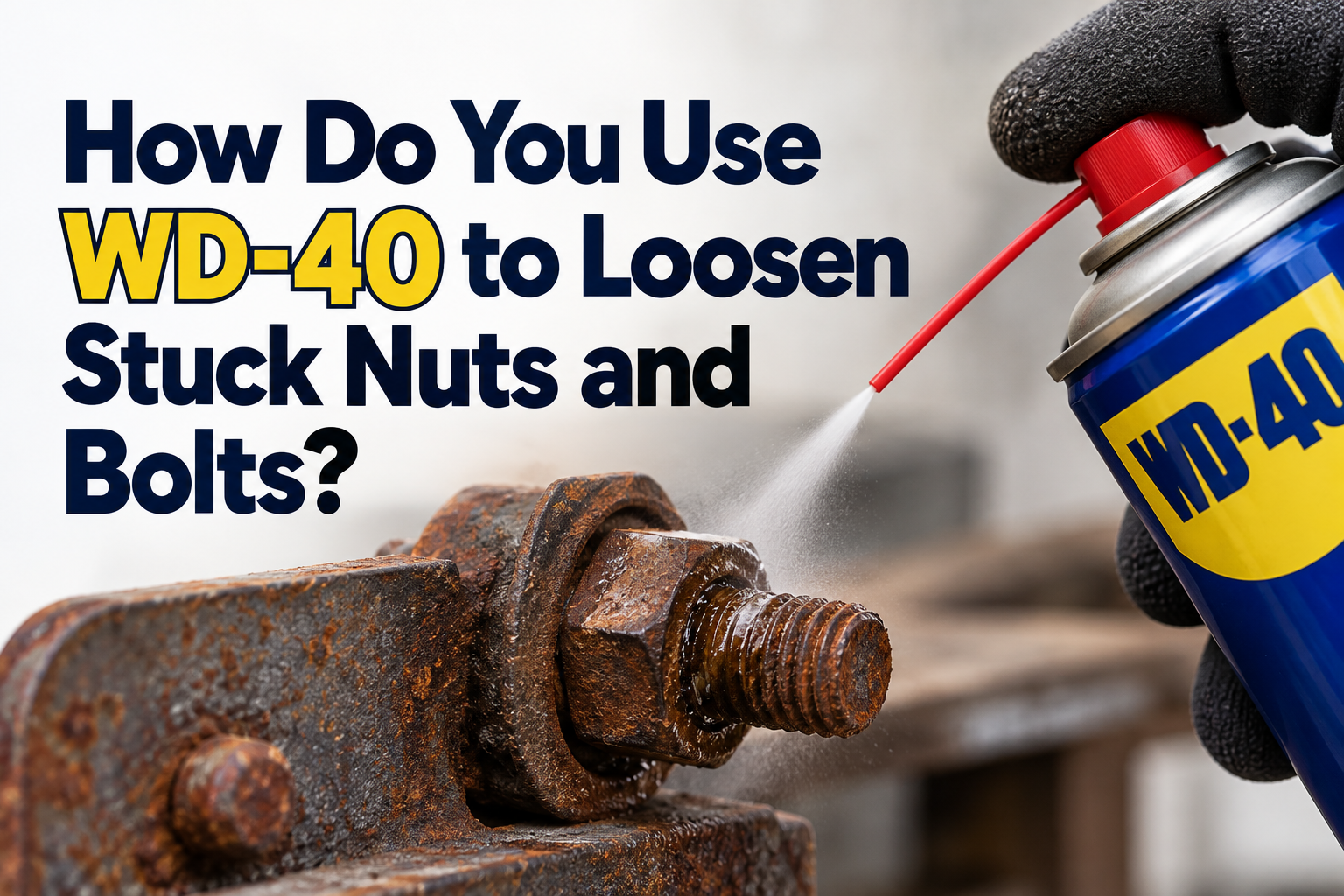
How Do You Use WD-40 to Loosen Stuck Nuts and Bolts?
Quick Answer
To loosen a stuck nut or bolt with WD-40, first remove loose rust and dirt with a wire brush. Then spray the product around the threads and let it soak for a few minutes so it can reach the stuck joint. Use a correctly sized wrench or socket to loosen the fastener, and repeat the process if needed. Never use a flame near the spray or its vapours.
How to Use WD-40 to Loosen Stuck Nuts and Bolts
Stuck nuts and bolts can make simple repairs frustrating, especially when rust, dirt, and age make metal parts hard to turn.
WD-40 can help loosen stuck fasteners by reaching the joint and helping free rusted parts. To improve your chances of removing the fastener without damaging it, follow these steps.
What Do You Need Before You Start?
You need a few basic tools to loosen a stuck nut or bolt safely. Gather these items before you begin:
- WD-40 Multi-Use Product
- A wire brush
- A correctly sized wrench or socket
- Safety glasses and suitable gloves
Before you start, work in a well-ventilated area away from flames and sparks. WD-40 aerosol is flammable, so keep it away from heat and other ignition sources throughout the process.
How Do You Use WD-40 to Loosen a Stuck Bolt?
Follow these five steps to help loosen a stuck nut or bolt without damaging the fastener.
1. Clean the Nut or Bolt
Start by using a wire brush to remove loose rust, dirt, and debris around the fastener. Pay close attention to the exposed threads and the point where the nut meets the bolt.
Cleaning the area helps the spray reach the stuck joint more easily. It also makes the fastener easier to inspect for damage before you try to loosen it.
2. Spray WD-40 Around the Threads
Once the area is clean, spray WD-40 onto the exposed threads and around the base of the nut. If the bolt enters a metal part, apply the product around that joint too.
Use the attached straw when you need to reach a small or narrow space, and aim carefully to avoid spraying nearby surfaces unnecessarily.
3. How Long Should You Leave WD-40 on a Stuck Bolt?
After spraying, leave WD-40 on the fastener for a few minutes before trying to loosen it. This gives the product time to reach the joint.
If the bolt is heavily rusted, it may need another application and a longer wait. Do not expect every fastener to loosen after one spray, as the amount of rust and damage can affect the result.
4. Use the Right Wrench or Socket
Once the product has had time to work, fit a wrench or socket that matches the fastener’s size. A loose-fitting tool can slip and round off the bolt head or nut, making removal harder.
For most standard threads, turn the nut counterclockwise to loosen it. Apply steady, controlled force instead of sudden, hard pulls. However, some fasteners have reverse threads, so check before turning.
5. Apply WD-40 Again if the Bolt Will Not Move
If the fastener remains stuck, stop applying force and spray more product around the joint. Give it more time to reach the stuck area before trying again.
You may gently tap the surrounding metal with a suitable tool if the parts allow it. However, avoid heavy blows that could damage the threads or nearby parts. If the bolt head starts to round off or the bolt begins to bend, stop to prevent further damage.
Is WD-40 Multi-Use Product the Best Choice for Stuck Bolts?
WD-40 Multi-Use Product can help loosen stuck parts and protect metal from moisture. However, when fasteners are heavily rusted, a product made specifically for penetrating rusted joints may work better.
Choose the product based on the condition of the fastener, and always follow the directions on its label.
Important safety note: Never use a torch or other flame near WD-40 or its vapours. Do not apply heat while the product may still be present. Before using any heat-based removal method, follow the product’s safety directions.
How Can You Prevent Nuts and Bolts from Getting Stuck Again?
Regular care can help prevent rust and make future repairs easier. To keep your fasteners in better condition, follow these steps:
- Keep tools and metal parts clean and dry.
- Store tools in a dry place.
- Check exposed fasteners for rust during routine maintenance.
- Use a suitable lubricant or corrosion protector when the job calls for one.
- Replace badly damaged nuts and bolts instead of forcing them.
With good storage and regular checks, you can reduce rust and make future repairs easier.
Conclusion
WD-40 can help loosen stuck nuts and bolts when rust or dirt makes them hard to turn. Start by cleaning the area, spraying the threads, and waiting a few minutes before using the right tool. If the fastener remains stuck because of severe rust, repeat the process or use a suitable penetrating product. Work carefully throughout the process, and never use a flame near the spray or its vapours.
FAQs
Can WD-40 loosen a rusted nut?
Yes, WD-40 can help loosen a rusted nut, but the result depends on how severe the rust is. Heavily rusted nuts may need repeated applications or a dedicated penetrating product.
Should you leave WD-40 on a bolt overnight?
Not always. Start by waiting a few minutes, as directed on the product label. A badly rusted fastener may need a longer soak, but leaving WD-40 overnight does not guarantee success.
Why is my bolt still stuck after using WD-40?
The bolt may have severe rust, damaged threads, or a rounded head. The product may also need more time to reach the joint. Check that your tool fits properly, and avoid forcing the bolt if it will not move.
Can you use heat after spraying WD-40?
Do not use heat near WD-40 or its flammable vapours, and never use a torch while the product may still be present. Follow the product’s safety directions before considering a heat-based method.
